Cardiac apprehension does not set visits. It happens in kitchens and parking lot, during institution sports and late-night shifts. I have debriefed groups after perfect saves, and I have actually likewise paid attention as a spectator wrestled with one haunting thought: I understood CPR when, yet I froze. That gap in between knowledge and activity is the greatest argument for a yearly CPR correspondence course. Abilities discolor. Standards progress. Confidence erodes if you do not utilize what you found out. A short, concentrated upgrade restores rate, accuracy, and calm when secs lug a life.
Annual refresher courses are not only for specialist responders. Moms and dads, instructors, health and fitness trains, protection team, friendliness teams, and remote employees all bring more obligation than they sometimes realise. A cpr course outfits you to begin compressions and use a defibrillator. A yearly cpr refresher course sees to it you still can, which you still will.
What changes from year to year
Resuscitation science changes in cautious steps, not fads. However the information matter. Over a decade, standards readjusted compression price and depth, streamlined the compression to air flow proportion for laypeople, incorporated hands-only CPR as a solid alternative for grownups, and refined when to return to compressions after a shock. If you found out years back and have actually not taken a cpr training update, your mental version is likely out of date.

Instructors in a first aid and cpr course filter brand-new referrals into functional habits. That issues since heart attack is messy. Wet floorings, limited areas, agonal gasps, loud environments, and half-charged AEDs examine your focus. An annual testimonial positions the latest scientific research right where it belongs, inside your muscular tissue memory. You need to not be discussing if it is 100 or 120 compressions per minute while a colleague turns blue. You need to hear the rhythm, set your stance, and start.
The half-life of hands-on skills
I have actually run simulated codes with staff who vowed they can supply ideal compressions, only to see their depth fade within 2 minutes. That is not a moral falling short. It is physiology. Without reinforcement, psychomotor abilities decay. Researches vary on the exact timeline, yet a typical pattern arises. Method begins to drift within three to six months for people that do not practice. By a year, lots of fight with correct hand placement or stop working to allow the upper body recoil. Air flow control deteriorates even faster.
The great information is that refreshers bring back performance rapidly. A solitary early morning of concentrated technique on manikins that give online responses can tighten your depth variety, improve your price, and re-train your recoil. The trick is rep on accurate tools. That is why a credible company issues. A first aid pro teacher will certainly stagnate on till you struck the target ranges reliably, not simply once.
Real-world speed beats book perfection
In concept, you run through the formula in order. In technique, you troubleshoot on the fly. The AED pads remove sweat. A youngster vomits during rescue breaths. A colleague yells a purposeless recommendation. The dog barks or the alarm system sounds or a manager desires a status upgrade. Yearly refreshers lean right into this reality. Situation training hammers home one lesson most importantly: compressions first, and keep them selecting minimal interruptions. Whatever else supports that priority.
I keep in mind a drill in a resort entrance hall where the team improvisated a knee pad with a folded up carpet. That tiny solution maintained the compressor secure and slowed down the start of fatigue. Small information such as this are less complicated to notice after you have drunk the rust off. It is likewise where cross-training with wider first aid beams. A first aid course that incorporates aed use and choking feedback with CPR turns abstract expertise right into a sequence you can run under stress.
Confidence is not blowing, it is prep work plus practice
People freeze for foreseeable reasons. Uncertainty regarding the medical diagnosis. Concern of doing damage. Fret that they will be condemned if the outcome is inadequate. A yearly cpr correspondence course addresses each concern with proof and rep. Initially, it clarifies what counts as cardiac arrest when seconds issue: less competent, not breathing usually, or only gasping. Second, it reinforces that high-quality breast compressions help and hold-ups damage much much less than inactiveness. Third, it makes functions specific if you become part of a team. That calls for the AED, that times turnings, that removes prior to the shock. That quality turns onlookers right into responders.
Confidence built on current hands-on training has a measurable impact. In debriefs after actual events, people that trained in the previous year explain the very same interior shift. They did not feel take on. They felt busy. Beginning compressions, ask for the AED, swap at 2 mins, listen for the timely, resume today. Busy beats panic.
The defibrillator is your close friend if you have met it before
AEDs are developed for laypeople, and they are forgiving. Still, knowledge transforms a good device right into a quick one. Every model has somewhat different pad representations, voice motivates, and shock button places. The very first time you handle a brand-new system needs to not be during a collapse. Yearly CPR training generally includes time with the precise AED model your site uses. Muscular tissue memory establishes. professional onsite first aid training You grab the ideal pouch, you tear in the appropriate instructions, you put pads without second-guessing, and you get rid of the individual before the shock due to the fact that you have actually exercised the words that make individuals tip back.
I dealt with a neighborhood sports club that maintained the AED in a locked storage room. The logic made good sense at the time, focused on theft prevention. During a refresher course, we timed the run to retrieve it. The hold-up was virtually 2 mins. That drill caused an easy change: a noticeable closet near the field and a sign-out process for maintenance checks. Without the yearly evaluation, that unseen area may have lingered until the evening it mattered.
Why offices ought to put refresher courses on the calendar
Many organisations do a first aid and cpr course when they open up a site or after a case, after that let the momentum fade. A better technique deals with ability like any kind of various other security system, with scheduled upkeep. Map the duties that should react rapidly: frontline staff, change leads, facilities, protection, fitness center trainers. Straighten lineups so that at least 2 experienced people exist in any way times in busy locations. Then publication annual refresher courses with a first aid training company who can tailor material to your risks.
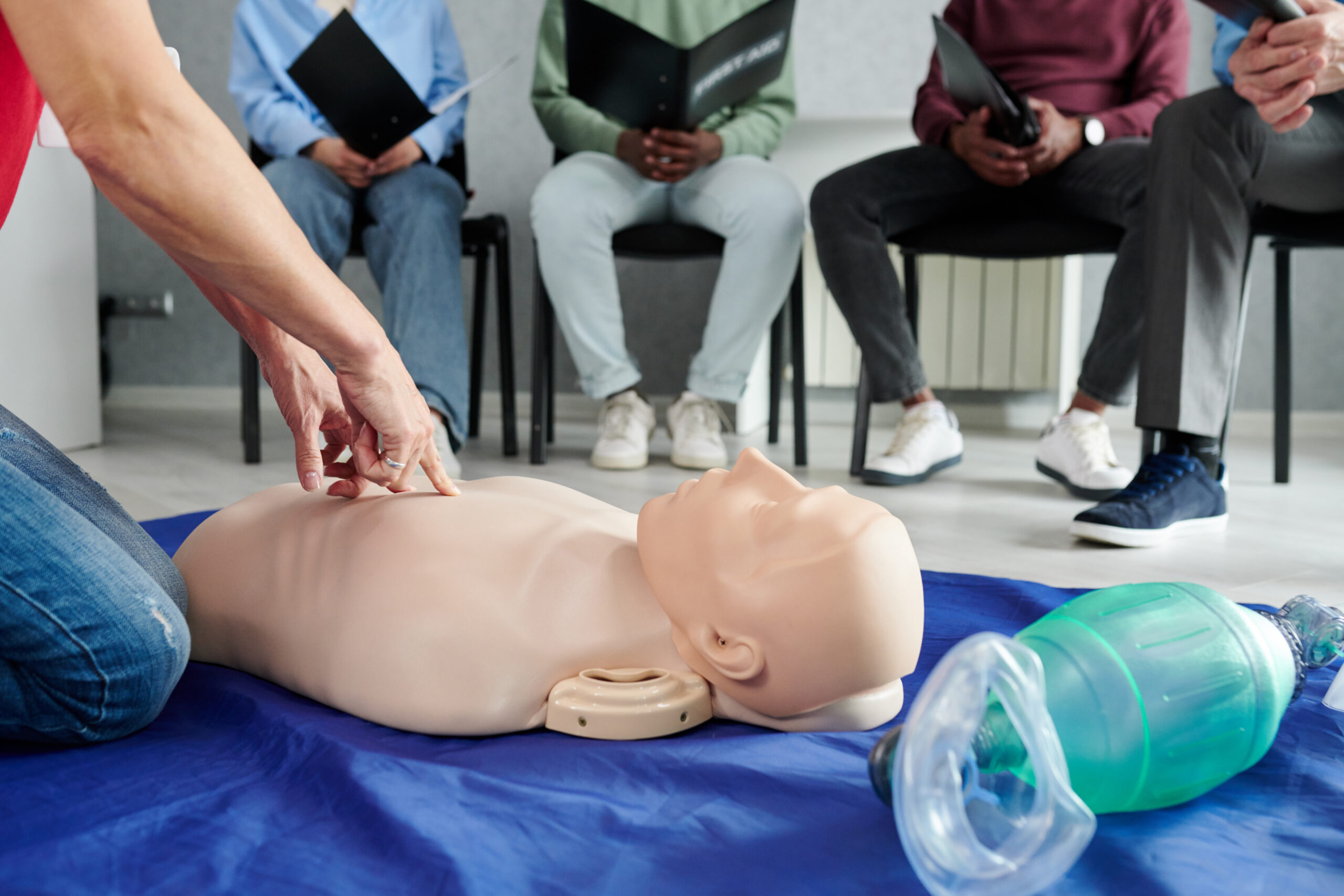
Offices require grown-up CPR and AED use. Schools require infant and child adjustments and choking drills. Storage facilities benefit from circumstances in tight aisles and noisy atmospheres. Remote teams should exercise calling for aid where addresses are unclear and mobile coverage might drop. The most effective first aid and cpr courses do not educate in a vacuum cleaner. They bring your floor plans, your devices, and your constraints into the room.
An included advantage of a persisting routine is culture. When individuals understand the business values preparedness, they speak out around gaps. Someone notices that the AED pads end next month. Someone else identifies that the first aid set does not have a pocket mask. These are tiny victories that add up.
Legal and qualification realities
Different regions set various renewal needs for a first aid certificate and CPR recommendations. Some companies call for evidence of current proficiency every 12 months for roles like child care, physical fitness sector, or safety and security. Even where the regulation is looser, insurance providers and market bodies usually suggest yearly refreshers for CPR and every three years for more comprehensive first aid courses. Review the small print. Lots of cpr courses provide an across the country recognised declaration of attainment with a 1 year currency period. If your group last qualified two years back, you may run out step with plan even if staff bear in mind the basics.
Do not allow compliance drive the bus and neglect top quality. A short tick-box session with no responses does bit. Select cpr training that includes assessed compressions on feedback manikins, AED operation, and situation work. If you are booking for a group, ask the service provider regarding course dimension. Once a class slips past a lots individuals per trainer, the time on the floor covering shrinks fast.
What an efficient annual refresher looks like
Good refreshers really feel quick, functional, and relevant to the learner's context. The theory section ought to be limited, just enough to align on the formula and current updates. Most of the moment belongs to drills. Instructors revolve individuals through adult, child, https://privatebin.net/?164fcc2b613c690a#EhpJyQAYAfbh3s18SjHgTKxHgydkfdaUesgaSfLobY76 and baby manikins if their duty requires it, with comments on deepness, rate, and recoil. Teams practice AED use on an instructor that imitates shockable and non-shockable rhythms. Obstacles for rescue breaths are gone over and used where ideal. Choking alleviation is evaluated, and healing placement strategy gets a fast tune-up.
Between drills, an excellent trainer tells the why. They describe why deepness issues for perfusion, why you enable full upper body recoil to replenish the heart, why disturbances cost lives, and why you resume compressions quickly after a shock. That anchor helps abilities stick.
The numbers that set expectations
Survival from out-of-hospital heart attack varies by establishing, response time, and rhythm. Generally, very early CPR and very early defibrillation double or triple the opportunity of survival when the preliminary rhythm is shockable. Also then, the outright numbers can be sobering, with survival to healthcare facility discharge in lots of systems dropping in between about 5 and 20 percent. Those figures can feel inhibiting until you recall the counterfactual. Without bystander CPR, survival collapses. With it, the window remains open long enough for innovative like matter.
Annual refreshers are not magic. They do not assure a save. They raise the chances you will provide top quality compressions faster, maintain them much longer, and set them with a shock that arrives in minutes as opposed to several minutes. That is the bar you control.
Myths that maintain people from updating their skills
One typical misconception claims that AEDs are dangerous to utilize without sophisticated training. The reality is easier. AEDs evaluate heart rhythm immediately and encourage shocks just when ideal. The risk of hurting a spectator is very little if you comply with the punctual to stand clear. An additional misconception holds that you can break ribs and be liable. Premium upper body compressions occasionally fracture ribs, particularly in older clients. That risk is tiny next to the end result without compressions, and great belief efforts to give first aid are safeguarded by law in many jurisdictions.

A quieter myth claims that absolutely nothing much has transformed because your last class, so there is no point. As noted earlier, the fundamentals stay constant, yet the supporting guidance maintains refining. Also if the formula were identical, your performance would certainly gain from practice. I have actually never seen an individual leave a refresher without a minimum of one quantifiable enhancement or a new routine that trims an avoidable delay.
Integrating CPR with broader very first aid
CPR does not exist in a vacuum cleaner. A first aid course that bundles CPR with hemorrhaging control, anaphylaxis response, and fracture monitoring turns you right into a more qualified spectator. Why does that matter for a cardiac arrest? Since scenes develop. You may require to get rid of the air passage of vomit, acknowledge agonal breathing instead of normal respirations, or manage a collapse that follows injury. Annual evaluations maintain these nearby abilities ready.
If your role includes supervising kids or infants, you ought to prioritise the details procedures for those age. Compressions make use of one or two hands on a youngster relying on size, and 2 fingers or thumbs on a baby. Air flows play a bigger function for pediatric apprehensions, which typically stem from breathing causes. An annual first aid and cpr course with pediatric modules keeps that difference fresh.
How to choose the ideal carrier for refreshers
The market ranges from superb to sub-par. Ask a couple of difficult concerns before you book:
- Do you use feedback manikins that report price, deepness, and recoil in genuine time? Will we experiment the same AED version we have onsite, or a close equivalent? What is the proportion of individuals to trainers, and how much hands-on time does each person get? Can you customize situations to our environment and constraints? Does the program concern or renew an acknowledged first aid certificate or CPR declaration of accomplishment, and what is the currency period?
Those five concerns filter for high quality without including bureaucracy. A company who invites them and responses plainly is likely to provide a solid experience. If a trainer waves off feedback tools or presses thirty individuals right into one session with a single manikin, maintain looking. Whether you pick a large brand or a local first aid pro, demand method that makes your group better on the day, not just compliant on paper.
Edge situations and judgment calls
No formula covers every circumstance. You will certainly encounter minutes where you have to adapt:
A drowning victim with possible spine injury on a rough shore. Respiratory tract and breathing matter, however scene safety and security sets the pace. Getting the individual level sufficient for compressions without obtaining swept is the first decision.
A collapse in a confined plane aisle. You will compress awkwardly at an angle, you will swap more often, and you will collaborate with crew for an onboard AED and oxygen. A refresher course that runs a tight-space drill makes this less chaotic.
A suspected opioid overdose where the individual is hardly breathing. If you have naloxone, you utilize it without delaying basic life support. If not, you start with rescue breaths and compressions if they come to be less competent with no typical breathing. Yearly sessions that talk about local overdose patterns hone this response.
A post-shock minute where the patient gasps and relocations. You still return to compressions unless they wake sufficient to follow commands. Hesitation at this moment is common without current practice.
These are judgment calls that boost with situation exposure. The goal is not to script your feedback, it is to tighten the range of possible bad moves when tension peaks.
Making refresher courses stick in between courses
A solitary yearly session works best if you support it with little behaviors. Post the compression price target in break areas. Keep a pocket mask in the first aid set you in fact lug, not the one that lives in a locked cabinet. Run a two-minute compression drill quarterly in team conferences, turning through volunteers. Include the AED place and code in onboarding. Deal with these as component of routine operations, not as additional credit.
Many AEDs and manikin applications can export fundamental efficiency metrics. If you run a safety program, track typical time to first compression in drills, compression top quality percentages, and time to very first shock with the trainer gadget. Numbers push improvement. They also make the case for maintaining refresher courses on the budget line when cost cutters circle.
Cost, time, and the return on readiness
A common cpr correspondence course runs two to 4 hours. For teams that additionally require updates on bleeding control or anaphylaxis, a half day is common. Prices varies by company and area, however group sessions frequently cost less each than one-off bookings. When managers wait, put the price next to what is at risk. One avoidable fatality or extreme hypoxic injury lugs a human toll past calculation. It also brings investigations, lost spirits, and functional interruption. Time invested in capability is not overhead, it is resilience.
Individuals can make use of weekend break cpr courses through community centers, offices, or exclusive providers. Bringing a good friend or family member increases the benefit. If you cope with a person at elevated threat because of cardiovascular disease, rest apnea, or prior apprehension, your home readiness matters as high as any type of office plan.
Final ideas from the field
The most elegant rescues I have seen were not showy. They were silent and qualified. Somebody recognised unresponsiveness, one more started compressions within secs, a 3rd fetched the AED without roaming or dispute, and they cycled by the two-minute mark prior to fatigue set in. When paramedics arrived, the group went back and provided a crisp handover that spared no information. Those conserves really felt practically average. That is the point. Normal people, revitalized once a year, doing average actions well.
If it has been more than Additional resources twelve months considering that your last training, book a refresher currently. Pick a first aid and cpr course that fits your setting, insist on hands-on practice with comments, and leave with greater than a certification. Entrust to the simple confidence that you can act quick and act well. That is what issues when a heart beat stops.
And if you are accountable for a team, put refresher courses on the schedule for the year, not as a reaction to an occurrence, yet as a standing dedication. Change uncertainty with practiced activity. Outfit people with the routines that finish alarm systems and adrenaline. Annual CPR refreshers are not around checking a box. They have to do with providing someone the very best come across the most awful day of their life.